
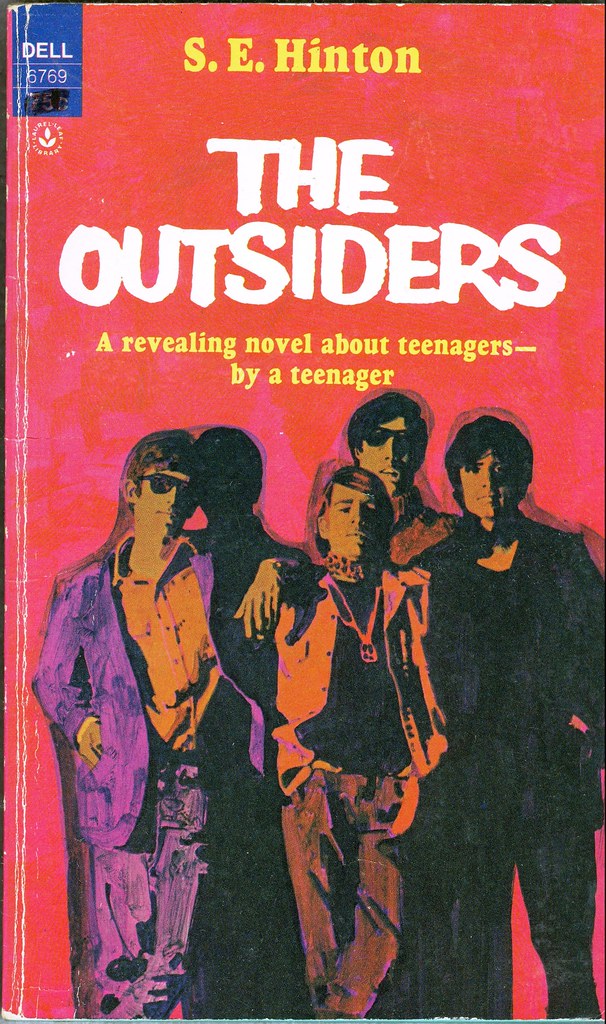
Statement of Inquiry:
Characters in literature can illustrate that our identity can be formed by the connection we make with others.
Content: A study of gang culture, using SE Hinton's reader The Outsiders as the literature text. The unit will explore the human need to fit in and the cause and effect of gang culture. The novel study will be supplemented by a range of non-fiction texts, including news articles and opinion columns. The two summative assessments will be an interview-based article on a character from the novel, and an analysis poster of an aspect of the novel.
Global Context: Identities and relationships (identity formation via affiliation)
Key Concept: Connections
Related Concepts: Character, point of view
ATLs
1: Communication Skills: Use appropriate forms of writing for different purposes
2: Communication Skills: Read critically and for comprehension
Learning Questions
Factual
- Who narrates The Outsiders, and what are the two rival social groups?
- What is the difference between direct and indirect characterisation?
- Which conventions identify an interview-based feature article and a research poster?
Conceptual
- How do relationships and group membership shape a character’s identity?
- How do narrative point of view and the selection of evidence influence an audience’s understanding of a character?
Debatable
- Does belonging to a group strengthen individuality or limit it?
- Can fictional characters teach us truths about real social divisions?
Learning Engagements
Online issues... We have copies for each of you waiting in school. Should for any reason you be unable to access these then please feel free to download this version until you can. (It is also useful if you wish to do a quick search for key words!)
Task